
Why Endpoint Protection Is Critical for Your Security
Why endpoint protection is non‑negotiable for your business security

As organisations move more work, data and apps to digital platforms, the devices people use become critical security choke points. Endpoint protection is the frontline that stops threats before they spread — keeping customer data secure, systems running and downtime to a minimum. This article explains why endpoints matter, the threats they face, and the practical benefits of a strong endpoint strategy. You’ll also find clear best practices and how LiquidIT helps businesses strengthen their cybersecurity posture.
What is endpoint protection — and why your business needs it
Endpoint protection is the set of tools and processes that secure endpoints — laptops, desktops, mobile devices and servers — from cyber threats. It brings together technology and policy to prevent unauthorised access, detect malicious activity and close vulnerabilities. With attacks growing more sophisticated, endpoint protection gives organisations a proactive layer of defence so they can run safely and confidently.
Defining endpoint protection: core components you should know
A robust endpoint program combines several elements: antivirus for known threats, firewalls to control network traffic, and endpoint detection and response (EDR) for advanced threat hunting and investigation. These controls complement one another — antivirus handles common malware, firewalls manage traffic, and EDR surfaces unusual behaviour so teams can respond fast.
Recent analysis clearly shows how EDR has evolved from reactive tooling into a central capability for modern endpoint defence.
EDR evolution: making endpoint security smarter
Endpoint Detection and Response (EDR) now plays a central role in enterprise security — helping teams detect, investigate and contain threats more effectively. This review traces EDR’s development, highlighting advances such as machine learning, behavioural analytics and integrated threat intelligence that give organisations better visibility and faster response.
Evolution of endpoint detection and response (edr) in cyber security:
A comprehensive review, H Kaur, 2024
How endpoint protection actually protects devices and data
Endpoint protection uses continuous monitoring, curated threat intelligence and automated responses to stop attacks early. By analysing device behaviour it flags anomalies that may indicate compromise. Encryption and access controls add an extra safeguard so that, even if data is intercepted, it remains unreadable to unauthorised users.
Threats that make endpoint protection essential
Attackers exploit endpoints because they’re often the easiest way into a network. Knowing the common and emerging threats helps teams prioritise protections and reduce risk.
Malware, ransomware and phishing — the immediate risks
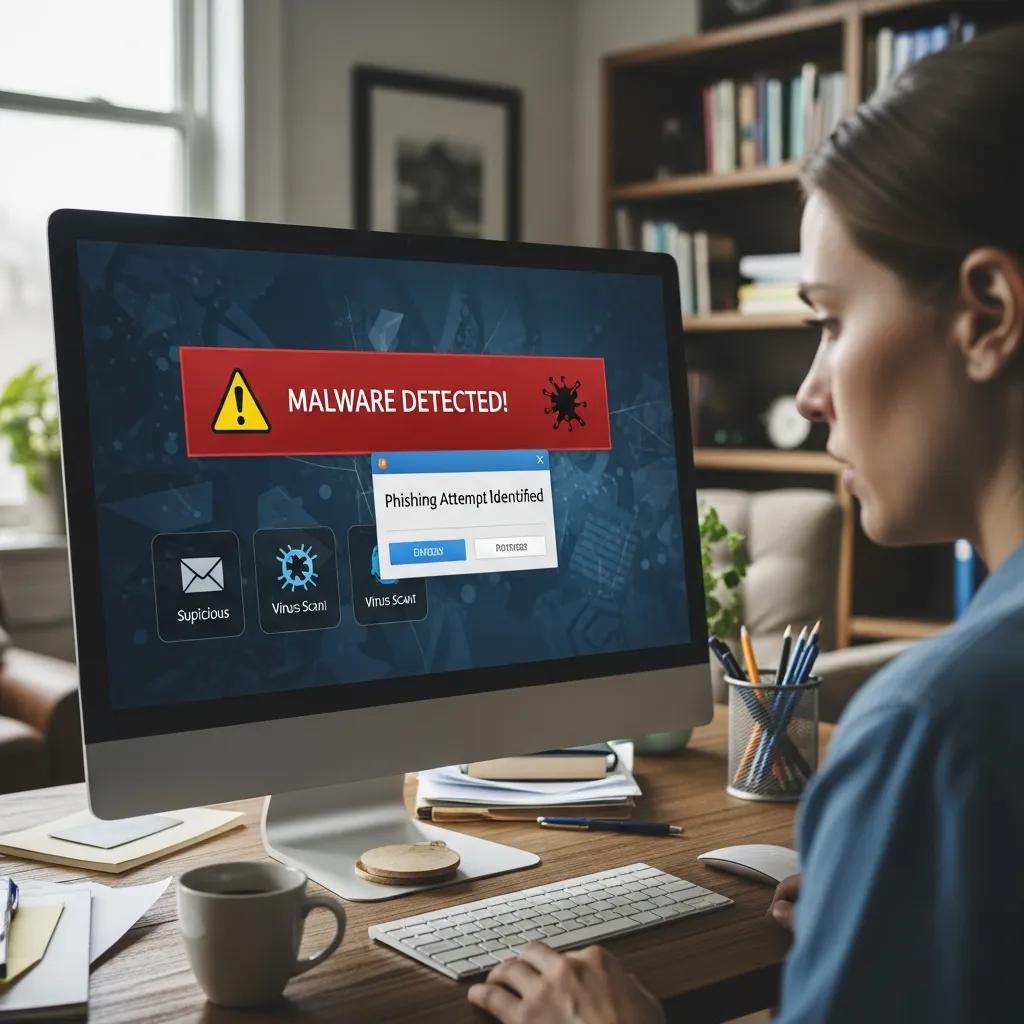
Malware — including viruses, worms and ransomware — remains a major business risk. Ransomware can encrypt critical systems and halt operations until a ransom is paid. Phishing tricks users into giving up credentials or installing malware, and it’s one of the most common attack vectors. These threats can cause lost revenue, reputational damage and regulatory exposure, which is why endpoint protection is essential.
Emerging risks: zero‑day exploits and insider threats
Beyond the well‑known threats, organizations must also plan for zero‑day exploits and insider risk. Zero‑day flaws are unknown to vendors and can be exploited before a patch exists. Insider threats — whether malicious or accidental — can expose data or weaken controls. A layered endpoint approach helps detect and limit these risks before they escalate.
Key business benefits of endpoint protection
Deploying endpoint protection delivers measurable benefits across security, operations and compliance.
Protecting data and keeping the business running
The most immediate benefit is safeguarding sensitive data and systems. Effective endpoint controls reduce breach risk, preserve customer trust and limit downtime — so your people can stay productive even during an incident.
Meeting compliance requirements and lowering long‑term costs
Endpoint protection supports regulatory compliance by demonstrating concrete security controls for data handling — important for regimes like GDPR and HIPAA. While there’s an upfront cost to implement protections, preventing breaches and reducing recovery spend typically delivers strong long‑term savings.
BenefitDescriptionImpact LevelData ProtectionSafeguards sensitive information from unauthorised accessHighBusiness ContinuityMinimises downtime during cyber incidentsHighRegulatory ComplianceHelps meet legal requirements for data securityMedium
How LiquidIT delivers proactive managed endpoint protection
LiquidIT takes a proactive, layered approach to endpoint security so organizations can detect threats earlier and recover faster. Our managed services combine tools, monitoring and local support to reduce risk and free your team to focus on the business.
Layered security: EDR, antivirus, firewalls and MFA
We combine EDR, modern antivirus, firewalls and multi‑factor authentication (MFA) to create overlapping lines of defense. EDR provides advanced detection and response, antivirus and firewalls cover known threats and network controls, and MFA adds an extra verification step to limit unauthorized access.
Industry findings reinforce that EDR capabilities are critical for defending against today’s most sophisticated attacks.
EDR tools: a core component against modern threats
As threats evolve, organisations need technologies that offer real‑time monitoring, automated response and forensic capabilities. EDR platforms provide these features, helping security teams combat complex threats such as ransomware, advanced persistent threats (APTs) and zero‑day attacks.
Effectiveness of Endpoint Detection and Response Solutions in Combating Modern Cyber Threats, 2024
Continuous monitoring, fast incident response and local support
Beyond tools, LiquidIT offers continuous monitoring and incident response to reduce dwell time and impact. Local, responsive support means issues are addressed quickly and in the context of your business environment.
Best practices for effective endpoint security
To get the most from endpoint protection, combine technology with process and people‑centric controls.
Timely patching and least‑privilege access
Keep software patched and minimize user privileges. Regular updates close vulnerabilities, and least‑privilege access reduces the blast radius if an account is compromised.
Security awareness training and zero trust architecture
Regular training helps employees spot phishing and other social engineering attacks. Pair that with a Zero Trust approach — verify every access request and assume no implicit trust — to strengthen your overall posture.
The Zero Trust principle — "never trust, always verify" — underpins modern security architecture.
Zero Trust: a practical security foundation
Zero Trust Architecture (ZTA) promotes continuous verification and minimal implicit trust across systems and users, improving resilience against both external and internal threats.
An analysis of zero-trust architecture and its cost-effectiveness for organizational security, AW Malik, 2022
Securing remote work and BYOD endpoints in practice
Remote work and BYOD increase the number and variety of endpoints — requiring clear policies and consistent controls to keep data safe.
Challenges in remote and BYOD environments
Unsecured home networks and personal devices often lack enterprise controls, which raises the risk of compromise. Addressing these gaps is essential to reduce exposure and protect business data.
Practical strategies for diverse device fleets

Put in place device management, enforce encryption and run regular security assessments. Mobile Device Management (MDM) helps enforce policies across personal and corporate devices so data stays protected no matter where it’s accessed.
StrategyDescriptionImplementationDevice ManagementEnforces security policies on all devicesDeploy an MDM solutionEncryptionProtects sensitive data from unauthorized accessImplement full-disk encryptionRegular AssessmentsIdentifies vulnerabilities and areas for improvementConduct periodic security audits
With the right mix of technology, processes and training, businesses can dramatically reduce endpoint risk and better protect their critical assets.
Frequently Asked Questions
What types of businesses benefit most from endpoint protection?
Every organization benefits, but it’s especially important for businesses that handle sensitive customer or patient data — for example, healthcare, finance and e‑commerce. Companies with remote workforces or BYOD policies also see the biggest gains because endpoints are more exposed.
How often should businesses update their endpoint protection software?
Keep protection up to date as soon as patches and security updates are available. Many teams operate a monthly maintenance cycle, but critical fixes should be applied immediately. Regular reviews of configurations and policies ensure you stay protected as threats change.
Can endpoint protection solutions integrate with existing IT infrastructure?
Yes. Most modern endpoint solutions are built to integrate with common operating systems, network setups and security tools. When evaluating options, assess compatibility and how the solution will fit into your monitoring, ticketing and response workflows.
What role does employee training play in endpoint protection?
Training is essential. Well‑informed employees spot phishing, avoid risky behaviour and act as an early warning system. Combine technical controls with recurring awareness sessions to create a security‑minded culture.
What are the signs that an endpoint protection solution is needed?
Warning signs include frequent security incidents, unexplained system slowdowns, repeated unauthorized access attempts or reports of suspicious emails and activity. Rapid growth or changes to your IT estate are also good triggers to reassess endpoint controls.
How does endpoint protection differ from traditional antivirus software?
Traditional antivirus focuses on identifying known malware. Endpoint protection is broader — it includes EDR, continuous monitoring, threat intelligence and automated response — giving teams the tools to detect and act on both known and novel threats.
What is the cost of implementing endpoint protection solutions?
Costs vary by organization size, number of endpoints and required features. Options range from subscription‑based managed services to on‑premise licensing. While there’s an initial investment, reducing the likelihood and impact of breaches typically delivers strong return on investment over time.
Conclusion
Strong endpoint protection is a practical, high‑impact way to reduce cyber risk and keep your business running. By combining the right tools, disciplined processes and employee awareness, organizations can defend against today’s threats and adapt as risks evolve. Don’t wait — take proactive steps to secure your endpoints and contact LiquidIT to discuss a tailored protection plan.