
Emerging Cyber Threats in the Digital Age
Emerging Cyber Threats in the Digital Age: How SMBs Can Identify and Prevent AI-Driven Attacks, Ransomware, IoT Vulnerabilities, Cloud Misconfigurations, and Phishing

New cyber threats combine advanced attacker tools with a bigger, more connected surface — and that creates outsized risk for small and mid-sized businesses (SMBs). This guide explains what makes a threat “emerging,” why SMBs are particularly exposed in 2025, and which practical steps buy real resilience without enterprise budgets. You’ll get clear explanations of AI-driven attacks, modern ransomware, insecure IoT, cloud misconfigurations, and AI-enhanced phishing — how they work, how to spot them, and what to prioritize first. Each threat links to direct mitigations and managed-service options so SMB leaders can turn strategy into repeatable controls. Throughout, we focus on checklists, diagnostic tables, and actionable next steps to help decision-makers reduce breach risk, cut downtime, and meet basic compliance goals.
What Are the Most Critical Emerging Cyber Threats Facing SMBs in 2025?
In 2025, the most urgent threats come from attackers using automation, commoditized crime services, and new impersonation techniques that exploit weak identity and asset hygiene. AI is enabling highly personalized social engineering, Ransomware-as-a-Service scales extortion, and unmanaged devices and cloud mistakes give attackers footholds. For SMBs the consequences can be severe: operational outages, data loss, regulatory exposure, and reputational damage that can threaten the business. Knowing each threat’s attack path and the concise mitigations you can buy or build makes it easier to prioritize security spend under constrained budgets.
How Is AI Driving New Cyber Threats Like AI-Powered Phishing and Malware?
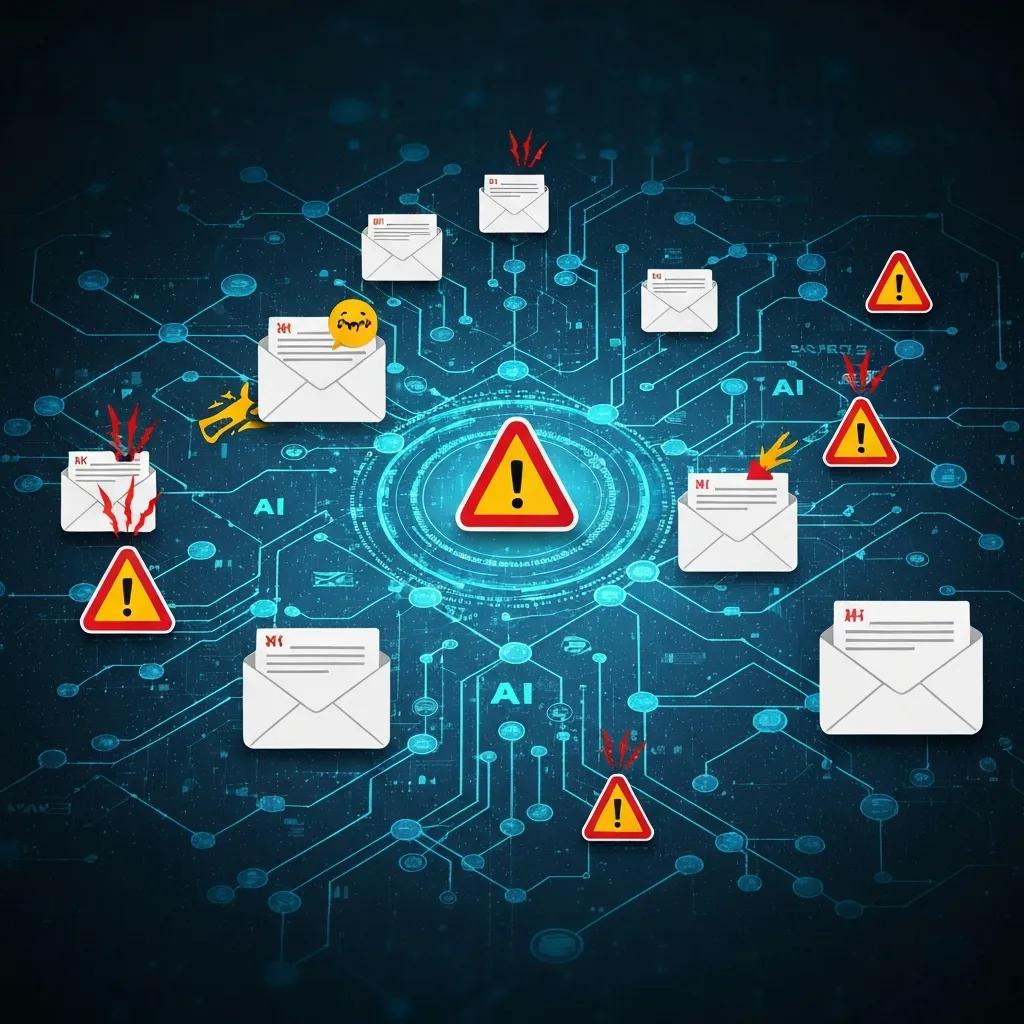
AI accelerates attacker reconnaissance, personalizes lures, and can create synthetic audio or video for convincing impersonations. Generative models let adversaries produce spear-phishing at scale, while AI-assisted malware obfuscates and morphs to evade simple signature checks. SMBs gain an edge by combining AI-enabled detection and behavioral analytics that look for anomalies, not just known signatures, with people-focused training so staff spot context-rich social engineering. Together these technical and human controls reduce successful impersonations and shorten attacker dwell time.
AI in Spear Phishing Defense: Detecting and Thwarting Advanced Email Threats This review surveys 23 studies on using AI to detect and block spear-phishing. It traces how machine learning, natural language processing, and behavioral analytics have improved detection of sophisticated email threats that traditional filters miss. The paper notes real gains from AI-based defenses while highlighting ongoing challenges — adaptability, false positives, and the need for continuous model updates. It’s a useful summary of current capabilities and research directions in defending against targeted email attacks. A Review of AI in Spear Phishing Defense: Detecting and Thwarting Advanced Email Threats, N Mohamed, 2024
How SMBs can mitigate this: Run regular security awareness training that focuses on personalized, context-rich phishing.Deploy endpoint and network behavioral detection to surface AI-crafted anomalies.
Aligning detection with human verification helps intercept AI-driven deception before attackers abuse privileges or exfiltrate data.
Why Is Ransomware Evolving and How Does It Impact Small to Mid-Sized Businesses?
Ransomware has shifted into a service-driven, multi-stage business model: attackers combine encryption with data theft and double-extortion to maximize pressure. Criminals rent infrastructure, reuse toolkits, and gain initial access via stolen credentials or unpatched systems, then move laterally and exfiltrate data rapidly. For SMBs the fallout includes extended downtime, ransom demands, regulatory notifications, and lost customer trust — often costing more than technical recovery. High-impact defenses include immutable backups, automated patch management, network segmentation for critical systems, and tested incident response playbooks to speed recovery.
Ransomware-as-a-Service (RaaS) Ecosystem and Threats in Indonesia This study examines the rise of Ransomware-as-a-Service (RaaS) in Indonesia’s cybercrime landscape, showing how RaaS lowers the skill barrier and expands attacks. Using data from 2020–2024, it identifies sectors—government, healthcare, finance—as frequent targets and highlights common tactics like phishing and exploiting outdated systems. The research names dominant variants and describes the socioeconomic impact of these attacks, including financial loss and service disruption. Unveiling the Cybercrime Ecosystem: Impact of Ransomware-as-a-Service (RaaS) in Indonesia, T Hidayat, 2025
How SMBs can mitigate this: Implement automated patching and maintain frequent, immutable backups.Use endpoint detection and keep an incident response plan to limit lateral spread.
A layered posture that combines prevention, detection, and recoverability both lowers the chance of an attack and reduces its impact when one occurs.
How Can SMBs Protect Themselves Against IoT Security Vulnerabilities and Expanding Attack Surfaces?
IoT devices increase your attack surface by adding unmanaged endpoints that often lack reliable update mechanisms or strong access controls. Devices like cameras, environmental sensors, and embedded controllers can arrive with default credentials or old firmware, giving attackers easy entry points for lateral movement. Treating IoT inventory and network segmentation as foundational controls eliminates many opportunistic paths and makes detection easier. Prioritize internet-facing or high-value devices for monitoring and micro-segmentation to get big risk reduction for modest cost.
What Are the Common IoT Device Vulnerabilities Targeting SMB Networks?
Typical IoT weaknesses include default/weak passwords, unpatched firmware, insecure protocols, and little-to-no logging. Attackers exploit these flaws to pivot into the network, gather intel, or enlist devices in botnets. Detection begins with active asset discovery, vulnerability scanning tailored to embedded systems, and continuous monitoring for unusual traffic. SMBs without a security team can make meaningful progress by scheduling scans and isolating IoT devices on separate VLANs or SSIDs to limit lateral movement.
Inventory and scanning are the starting point for remediation and give the context needed to prioritize firmware updates and segmentation.
These detection-first steps let SMBs turn unknown devices into managed assets and sharply reduce opportunistic compromise risk.
Which Best Practices Secure IoT Devices and Smart Business Infrastructure?
Secure IoT begins with an authoritative inventory, then network segregation, credential change controls, and a patch cadence that follows vendor updates and end-of-life notices. When devices cannot be patched, use compensating controls like strict ACLs, protocol filtering, and monitoring rules that flag unusual outbound connections. Outsourcing IoT scanning and monitoring to a managed provider is often cost-effective for SMBs without in-house expertise, and procurement policies should require supplier security questionnaires and firmware verification for new devices.
IoT best practices checklist: Maintain a device inventory and classify risk levels. Segment IoT onto isolated networks and apply micro-perimeters. Enforce credential change management and automated patching where available.
Applying these prioritized controls reduces attack surface and makes incident detection and containment much easier for small teams.
What Are the Key Cloud Security Challenges SMBs Must Address in the Digital Age?
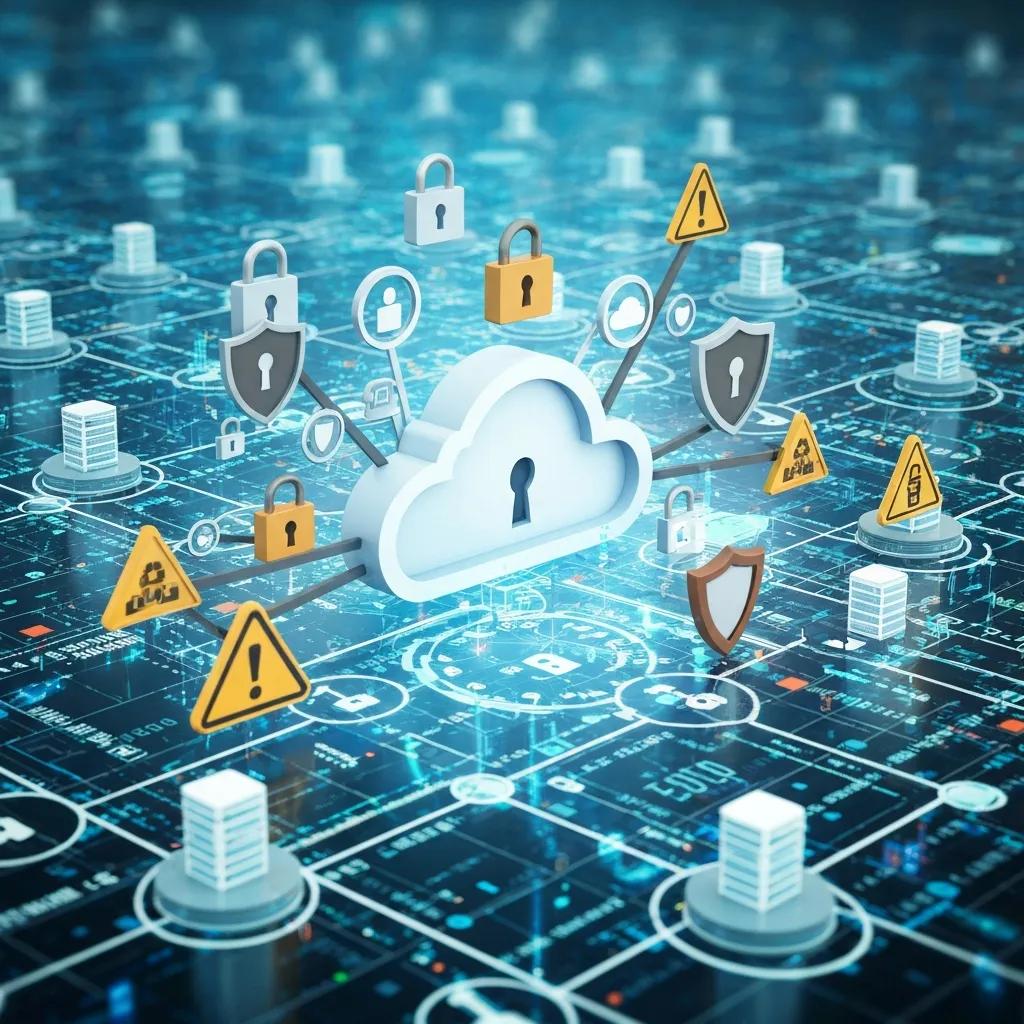
Cloud adoption shifts responsibility between provider and customer, which can leave SMBs vulnerable to misconfigurations, weak identity controls, and gaps in data governance unless posture is actively managed. Public storage misconfigurations, overly permissive IAM, and missing central logs are common, preventable causes of breaches. SMBs get the most benefit by enforcing identity controls, running continuous posture monitoring, and ensuring backups and encryption. Those controls map well to managed services that automate scanning and alerting while keeping internal overhead low.
How Do Cloud Misconfigurations and Data Breaches Threaten SMB Data?
Cloud errors like public object storage, overly broad IAM roles, or exposed management endpoints can lead to easy data exposure and unauthorized access. These mistakes can trigger compliance violations, customer data leaks, and costly remediation that disrupt operations. Fixes include periodic configuration reviews, automated drift detection tools, and enforcing least privilege with well-defined roles and conditional access. Centralized logging and retention policies also speed investigations and make regulatory reporting smoother when incidents occur.
Typical remediation steps include automated posture scans, IAM audits, and encryption at rest and in transit.
Addressing misconfiguration quickly reduces time-to-compromise and limits the scope of exposed data in cloud environments.
What Are Effective Cloud Security Best Practices for SMBs?
Effective cloud security for SMBs is identity-first: enforce MFA, apply least privilege, and automate posture management. Routine reviews of role assignments, conditional access policies, CSPM, and centralized logging help detect drift and suspicious activity early so small teams can focus on high-priority alerts. When internal capacity is limited, outsourcing continuous monitoring and remediation to a trusted provider preserves strong security without hiring specialized staff.
Cloud security checklist: Enforce MFA and least privilege for all cloud accounts. Enable CSPM and automated misconfiguration alerts. Maintain encrypted backups with tested recovery procedures.
Prioritizing these measures creates resilient cloud operations and aligns security posture with business continuity goals.
How Are Phishing and Social Engineering Attacks Evolving with AI and Deepfake Technologies?
Phishing and social engineering now use large public datasets and synthetic media to build convincing impersonations and targeted narratives that can bypass traditional filters. Deepfakes can mimic executive voices or video, and AI tailors messages to recent events to prompt action. The best defenses mix technical controls (email authentication, MFA) with procedural safeguards (call-backs, reinforced approval workflows). Ongoing, scenario-based awareness training builds the verification muscle memory employees need to spot and stop sophisticated scams.
What Are the Latest Phishing Attack Trends Including Spear Phishing and Business Email Compromise?
Recent trends include hyper-personalized spear-phishing, Business Email Compromise targeting finance and HR, and multi-channel campaigns that combine email with SMS or voice. Attackers harvest signals — vendor names, payroll dates, new hires — to make messages believable. Look for red flags such as unexpected fund requests, subtle domain spoofs, or pressure to bypass normal approvals. Technical controls like DMARC, DKIM, and secure email gateways reduce successful delivery, while procedural checks like two-step verification for payments stop fraudulent transfers even when credentials are compromised.
Detection and prevention essentials: Enforce DMARC, DKIM, and SPF to reduce spoofing. Require call-back verification for financial requests. Run regular phishing simulations to measure and improve behavior.
These layered controls reduce successful exploitation of social trust and improve early detection of compromised accounts.
How Can SMBs Detect and Prevent Deepfake and AI-Driven Social Engineering Attacks?
Detecting deepfakes needs a layered approach: combine synthetic-media detection tools with human verification and contractual safeguards for high-risk transactions. Watch technical signals like timing anomalies, mismatched voice metadata, and requests that don’t match normal business patterns. Process controls — out-of-band confirmations and mandatory pre-approved transaction templates — add friction that stops attackers even when impersonation looks convincing. Regular scenario-based training and simulated deepfake exercises teach employees to notice subtle cues and follow verification steps without blocking legitimate work.
Practical mitigations: Train staff on deepfake scenarios and verification procedures.Require out-of-band confirmation and strict transaction approval policies.
This blend of technology and process makes deepfake-enabled fraud harder to execute and easier to detect early.
What Proactive Cybersecurity Strategies Can SMBs Use to Build Resilience Against Emerging Threats?
A practical resilience framework focuses on identity and endpoint protection, scheduled patching and backups, continuous monitoring, and a workforce trained to recognize social engineering. Zero Trust principles (verify explicitly, least privilege, assume breach), Endpoint Detection & Response (EDR), Multi-Factor Authentication (MFA), automated patch management, and documented incident response plans form the core controls. Phasing these elements in a roadmap delivers quick wins while building toward mature capabilities. Mapping strategies to measurable outcomes helps leaders justify investment and track risk reduction over time.
How Does Zero Trust Architecture Enhance SMB Network Security?
Zero Trust limits lateral movement and shrinks the blast radius by requiring continuous verification and least-privilege access for users and devices. For SMBs, start with identity controls — strong authentication, device posture checks, and micro-segmentation around high-value assets. Expected benefits include fewer privilege escalations, faster containment, and clearer audit trails. A pragmatic rollout focuses on protecting critical systems first rather than attempting a full network rework at once.
Why Are Employee Security Awareness Training and Multi-Factor Authentication Essential?
People remain a top attack vector, and targeted awareness training lowers the chance that sophisticated phishing or social engineering succeeds. Regular phishing simulations, scenario-based exercises, and deepfake-focused modules build recognition and a culture of verification. Multi-Factor Authentication (MFA) provides a high-return, low-cost technical barrier that dramatically reduces account takeover risk even if credentials leak. Together, training and MFA address the most common, effective attacker techniques.
Must-have resilience checklist: Enforce organization-wide MFA for all accounts. Schedule quarterly security awareness training and phishing simulations. Implement EDR and automated patch management on endpoints.
Applying this checklist creates both human and technical layers that materially lower attack probability and impact.
LiquidIT note: If you’re ready to operationalize these controls, LiquidIT can deliver implementations that align with the strategies above and accelerate deployment through managed services and continuous monitoring.
How Does LiquidIT Help SMBs Combat Emerging Cyber Threats with Managed Cybersecurity Services?
LiquidIT, based in Scottsdale, offers managed cybersecurity services built for SMB priorities and budgets. Our capabilities include real-time intrusion detection, malware prevention, vulnerability scanning, automated patch management, 24/7 monitoring, rapid incident response, and security awareness training. These services help reduce dwell time, close vulnerability gaps, and strengthen the human firewall through ongoing training. Partnering with LiquidIT lets SMBs adopt enterprise-grade controls with predictable pricing and clear reporting — without building a costly in-house security operations center.
What Cybersecurity Services Does LiquidIT Offer to Prevent Ransomware, Phishing, and AI Threats?
LiquidIT’s managed services map directly to common threats: continuous monitoring and intrusion detection surface AI-driven anomalies and lateral movement; malware prevention and EDR protect endpoints from polymorphic threats; vulnerability scanning and automated patching reduce ransomware entry points; and security awareness training hardens staff against phishing and deepfakes. Rapid incident response contains issues quickly and restores operations according to a pre-agreed plan. These capabilities form a cohesive program to operationalize resilience without overloading internal teams.
Service-to-threat mapping in practice: 24/7 monitoring & intrusion detection → detects AI-driven anomalies and lateral movement. Vulnerability scanning & automated patch management → reduces ransomware entry points. Security awareness training → lowers success rates for phishing and social engineering.
This mapping shows how managed services turn strategy into continuous protection and faster recovery.
How Can SMBs Schedule a Consultation to Improve Their Cyber Resilience with LiquidIT?
SMBs that request an assessment can expect a simple, structured process: an initial discovery call, a security assessment that inventories assets and highlights high-priority gaps, and a prioritized roadmap with recommended managed services, timelines, and transparent pricing. We emphasize partnership, predictable costs, and clear reporting so you can track progress and compliance readiness over time. To start, contact LiquidIT via our website or published business profile to request an assessment and schedule a consultation.
The consultation produces a clear, actionable plan that balances immediate protections with longer-term resilience while preserving business continuity.
Emerging Cyber Threats in the Digital Age: How SMBs Can Identify and Prevent AI-Driven Attacks, Ransomware, IoT Vulnerabilities, Cloud Misconfigurations, and Phishing
In short: emerging cyber threats call for targeted, prioritized defenses that match SMB resources and risk appetite. Identity-first controls, endpoint detection, automated patching, secure cloud posture, and ongoing, human-centered training deliver the most consistent reductions in breach likelihood and impact. Managed services that provide continuous monitoring, vulnerability scanning, and incident response turn plans into operational security smaller teams can sustain. Start with an asset inventory, apply the must-have checklist, and engage a managed partner to accelerate resilience in a cost-effective way.
Frequently Asked Questions
What steps can SMBs take to enhance their cybersecurity posture against emerging threats?
Adopt a layered approach: enforce strong identity and access controls (MFA), run regular security awareness training, keep an up-to-date asset inventory, perform vulnerability assessments, and use automated patch management. When in-house resources are limited, partner with a managed provider to get continuous monitoring and enterprise-grade controls without heavy capital or staffing requirements.
How can SMBs effectively respond to a ransomware attack?
Follow a documented incident response plan: isolate affected systems immediately to stop spread, verify and use immutable offline backups for recovery, and communicate transparently with stakeholders and regulators as required. After containment, conduct a post-incident review to identify gaps and improve defenses to reduce recurrence.
What role does employee training play in preventing cyber threats?
Training is critical because human error remains a leading entry point for attackers. Regular, scenario-based training and simulated phishing tests build recognition and a culture of verification. Well-designed programs reduce click rates and empower employees to escalate suspicious activity — turning staff into an effective first line of defense.
What are the benefits of using managed cybersecurity services for SMBs?
Managed services give SMBs access to specialist expertise, continuous monitoring, and advanced tools that are costly to run internally. Providers handle threat detection, incident response, and compliance support, allowing businesses to focus on core operations while maintaining predictable costs and documented security outcomes.
How can SMBs ensure their cloud environments are secure?
Enforce strong identity and access policies (MFA for all accounts), run automated posture assessments, review and tighten permissions regularly, and ensure encryption for data at rest and in transit. Centralized logging and monitoring help detect issues quickly and support faster investigations and regulatory reporting.
What are the key indicators of a successful cybersecurity strategy for SMBs?
Indicators include fewer security incidents, improved outcomes from employee training and simulations, timely detection and response to threats, compliance with applicable standards, and a visible culture of security across the organization. Ongoing measurement and periodic reassessment ensure the strategy adapts to new threats.
Conclusion
Emerging cyber threats require a proactive, prioritized approach. By implementing identity management, endpoint protection, continuous monitoring, and people-focused training, SMBs can significantly reduce risk. Managed service partnerships can accelerate progress and keep costs predictable. Start with an honest assessment of your current controls, apply the must-have checklist, and choose pragmatic, measurable steps to strengthen your defenses.